The Pilgrims were religious reformists, outlawed in England where all were required to attend the Church of England. At first they moved to Holland, but out of fear of extinction as their children increasingly assimilated Dutch language and culture, they decided to move to the colonies in America.
In 1620, the Pilgrims sailed from Plymouth, England to Provincetown. For various reaons, they found Cape Cod to be inhospitable, so they moved on to the mainland and built a settlement they named “New Plymouth”.
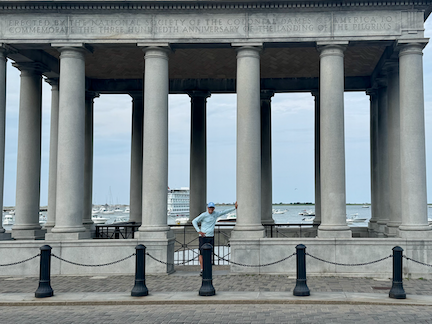
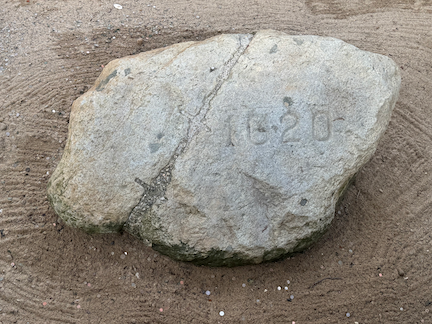
There are various controversial interpretations of the history of the Pilgrims, including the emblematic Plymouth Rock. This rock is supposed to be where they first landed, although it wasn’t mentioned until 100 years later. For many years, a hammer and chisel were left near the rock so that tourists could chisel off a souvenir. As a result, the rock is rather small today. Locals refer to it as “Plymouth Pebble”. But the majestic portico built to house it compensates for its diminshed stature.
Before moving off of Cape Cod, the Pilgrims signed a constitutional document called the “Mayflower Pact”. This document estaliblished the basis for self-governance, relying principally on the rule of law. Some consider the Mayflower Pact influential in laying the foundations of American democracy 1.5 centuries later. It is fitting to remember the principles of rule-of-law on the eve of the 250th celebration of American independence at a time when it is under growing threat.
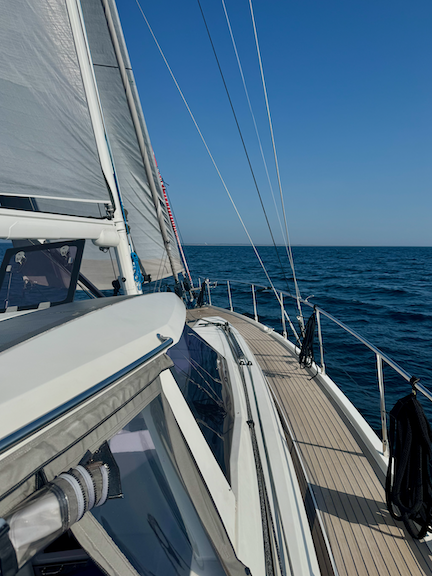
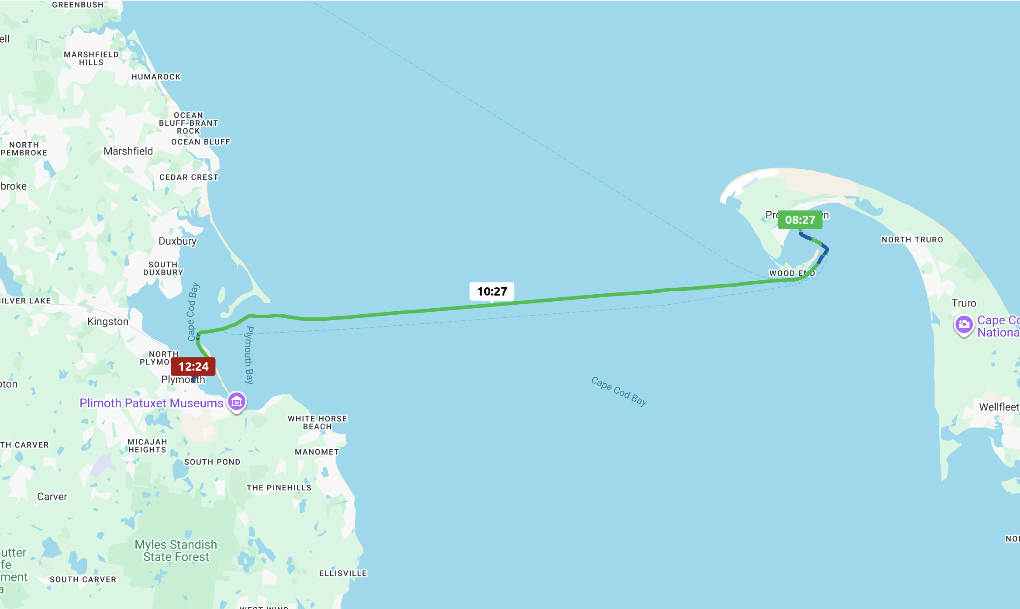
We left Provincetown in the morning for a perfect sail across Cape Cod Bay. The wind was abeam (from the side) at 15-20 knots. These conditions are the sweet spot for Fregata and she behaved like a champion race horse, maintaining 8 knots most of the way.
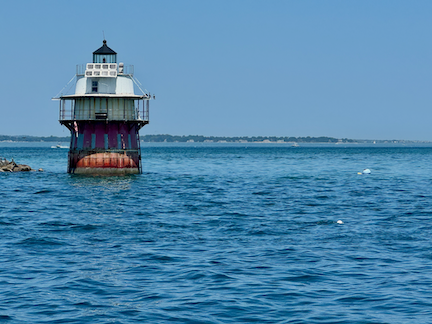
Plymouth Harbor is very shallow. We made sure to arrive at high tide, giving us an extra 8 feet over charted depths. We radioed the marina to ask about depth on final approach and were told we should “probably” be okay. I’m not very confident in “probably”, “might be”, or “should be” so, advancing at a snail’s pace with eyes on the forward depth scanner, we made it in safe and sound. One technique we like when entering shallow areas is to do so during flood (rising) tide. That way, if we were ever to run aground, the tide would eventually lift us off. After all, all sailors have run aground at some point, or they are lying about it.
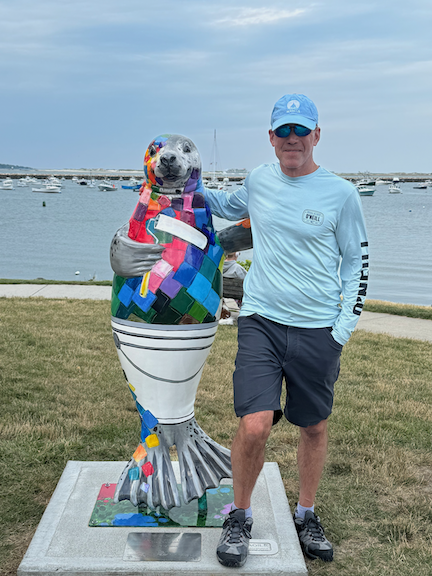
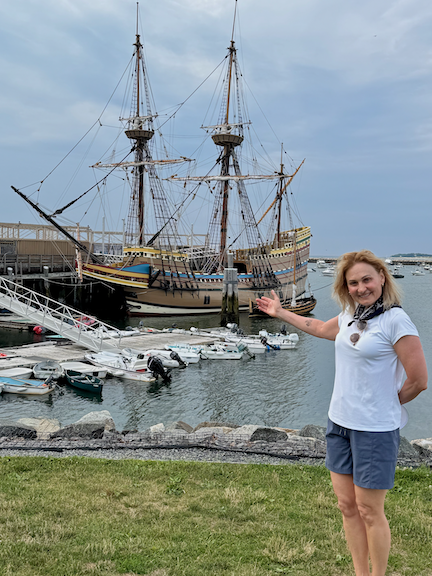
Plymouth is a pleasant town with good restaurants, outdoor concerts and, of course, historical artifacts of the Pilgrim landing and settlement, including a replica of the Mayflower offered as a gift from England after World War II
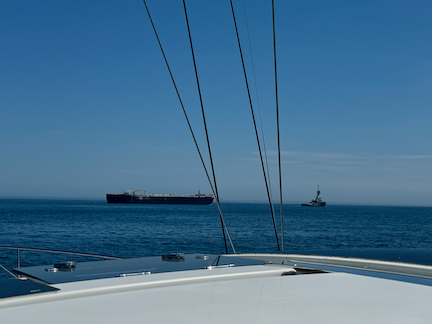

Crossing Cape Cod Bay
3 Responses
Sounds wonderful! The new neighbors are taking care of your “old house.” Enjoy!
Great pics and summary of historical Plymouth. Nice way to haul butt across the bay.
Thanks, Donna. Heard JLD is walking again… great news!