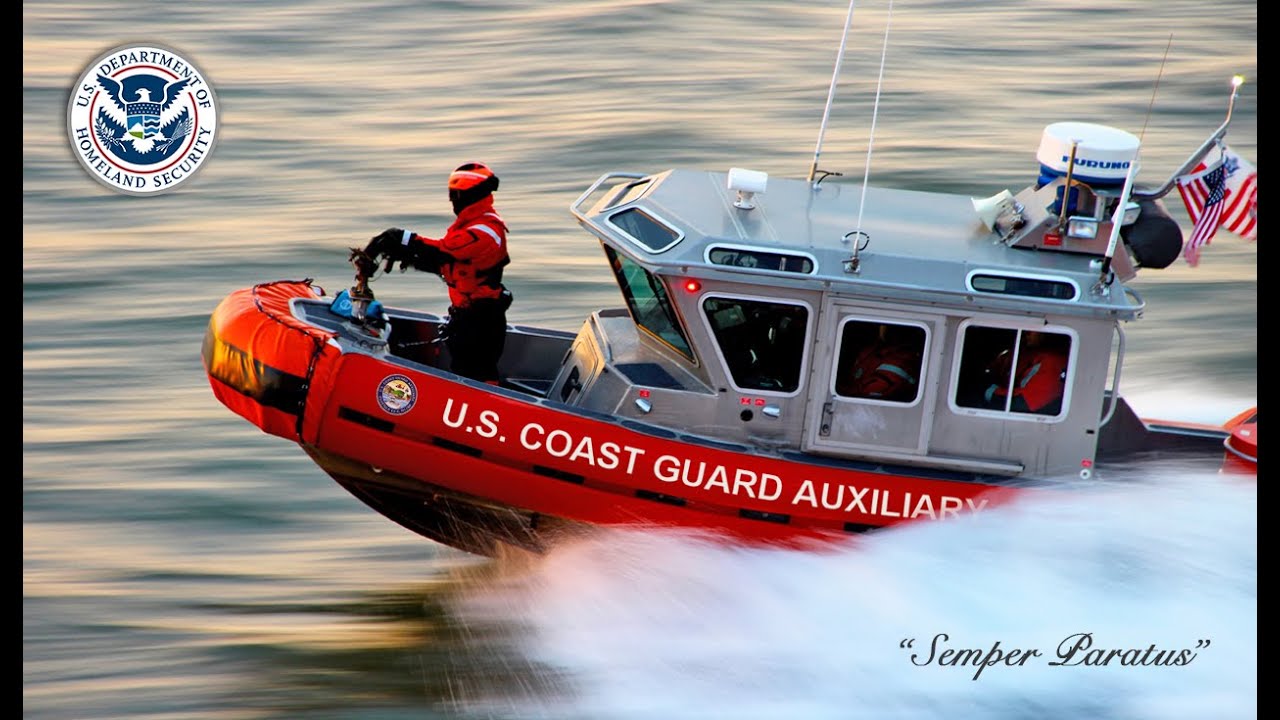
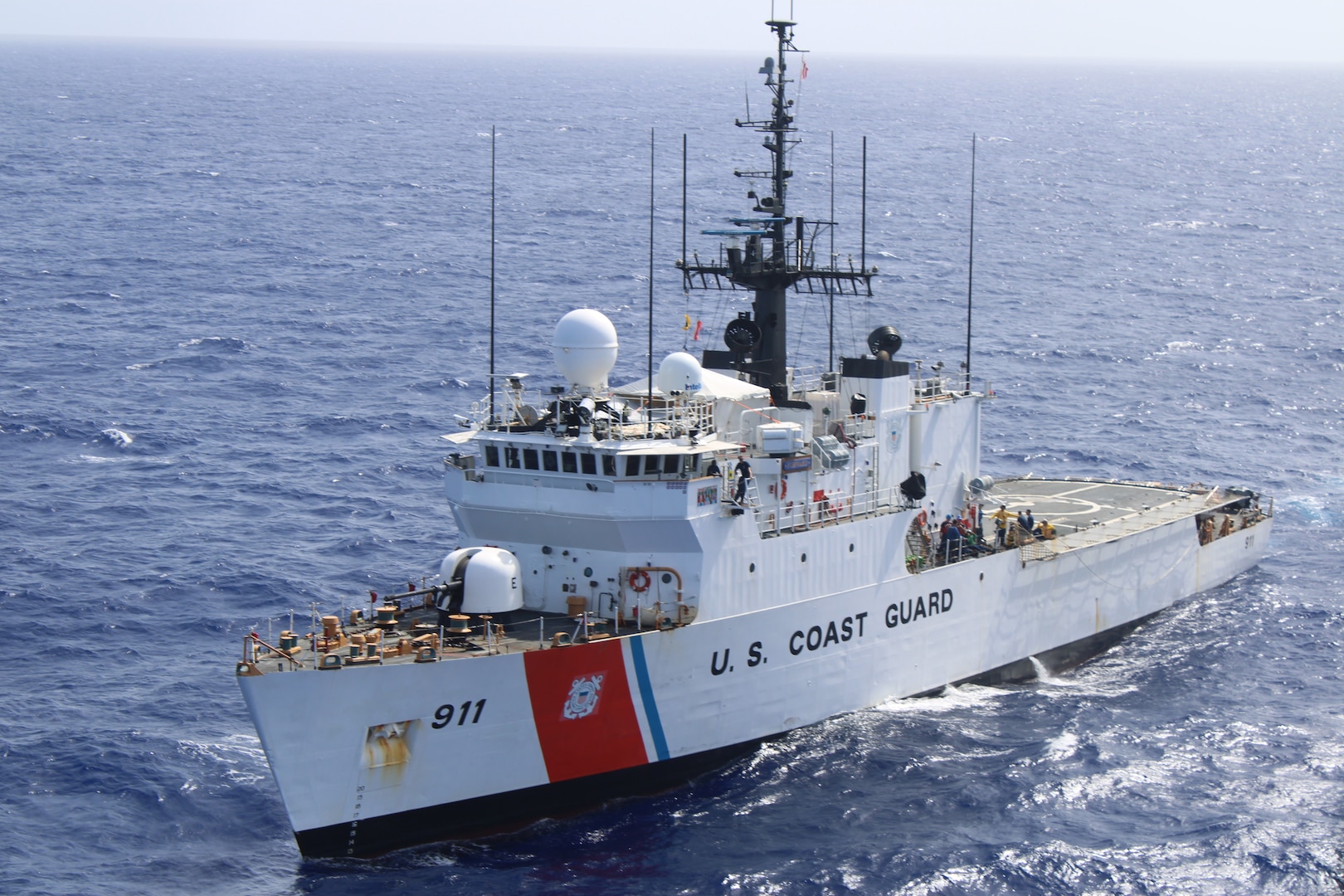
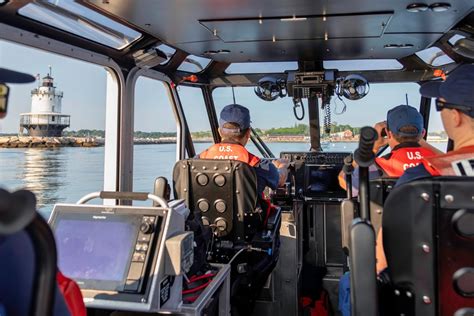
Some kids want to be firemen, policemen or pilots when they grow up. I wanted to be in the US Coast Guard. This dates back to the 1960s when my family spent a few weeks each summer in North Truro on Cape Cod. We would often visit nearby Provincetown, where I first learned to sail (see this post). The kid’s sailing club was next door to the US Coast Guard Station – Provincetown. I spent hours looking through the chain linked fence, watching the “Coasties” go about their daily business, and admiring their vessels, ranging from 25 foot inflatable rapid response boats, to 400 foot cutters.
Well, life happens, and my family moved to Switzerland when I was a young teenager. This allowed exposure to a very different world, and priorities changed… at least for the moment. Fast forward to 2018 when I reconnected with the USCG, becoming certified as a professional sea captain. I did this training to strengthen my overall knowledge of seamanship in anticipation of acquiring True North and embarking on long-distance cruising. It was also required to work professionally as a captain or a sailing instructor, which I did for several years after that. The certification course was taught by a couple of gentelemen who were part of the US Coast Guard Auxiliary. That peaked my curiosity about this organization.
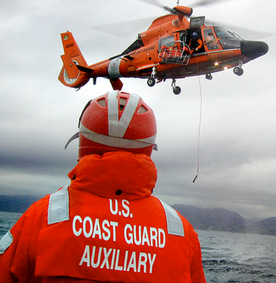
The Auxiliary, a volunteer force, was created in 1939 with the primary purpose of releiving the active Coast Guard of domestic duties while it focused on World War II. The Auxiliary’s mission today is to essentially augment the reach and capacity of the Coast Guard in all of its civil responsibilities. The auxiliary does not directly engage in military or law enforcement activities. Auxiliary members can often be found aboard Coast Guard vessels or aircraft, providing support to all activities ranging from tending lighthouses and navigational buoys, search and rescue missions, environmental protection. Auxiliary cooks can be found in the galley, while Auxiliary doctors tend to illnesses or injuries in the sick bay.
Members are a mix of retirees and younger people. Regarldess of age, we share passion for all things maritime, for protecting the environment, and for helping ensure safety for those that use the sea for their livelihood, or just for enjoyment.
I joined the Casco Bay Flotilla of the Northern New England Sector. This group, headquartered on the normal USCG base in South Portland, works alongside ithe regular Coast Guard in all of its missions as mentioned above.
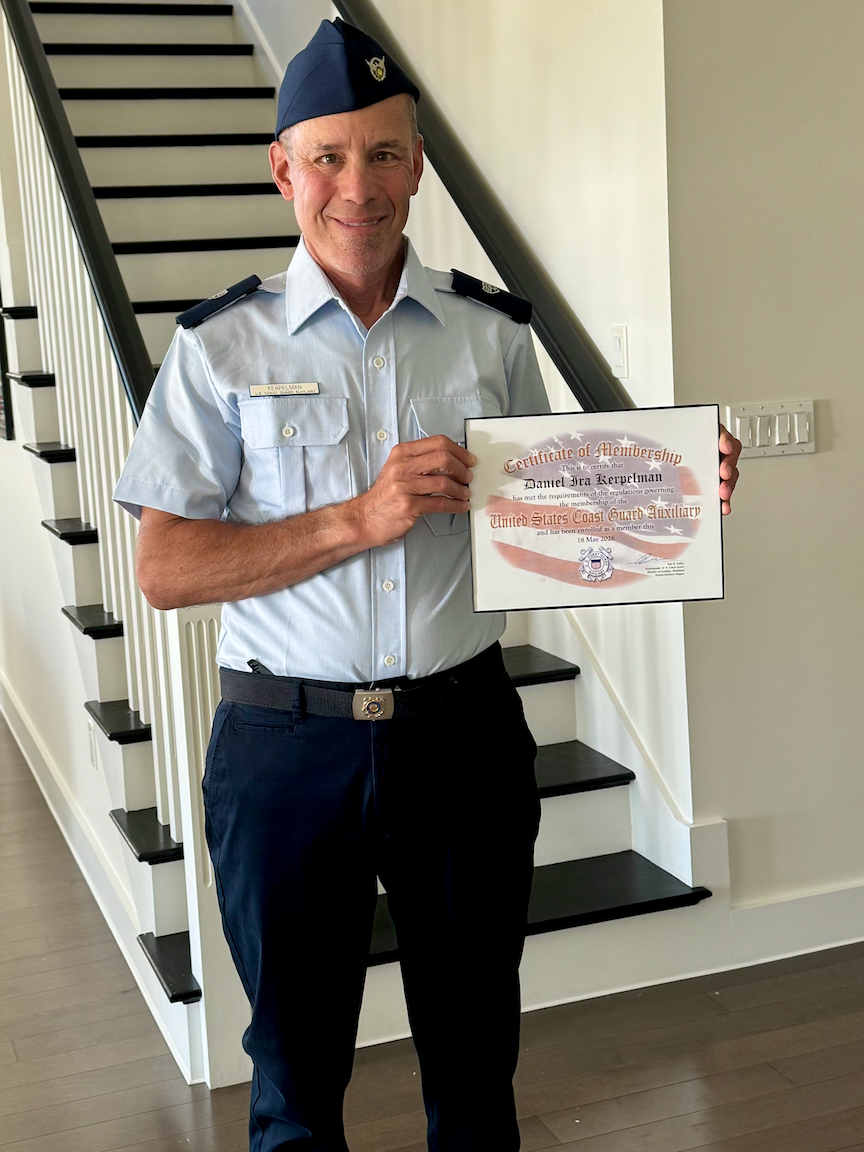
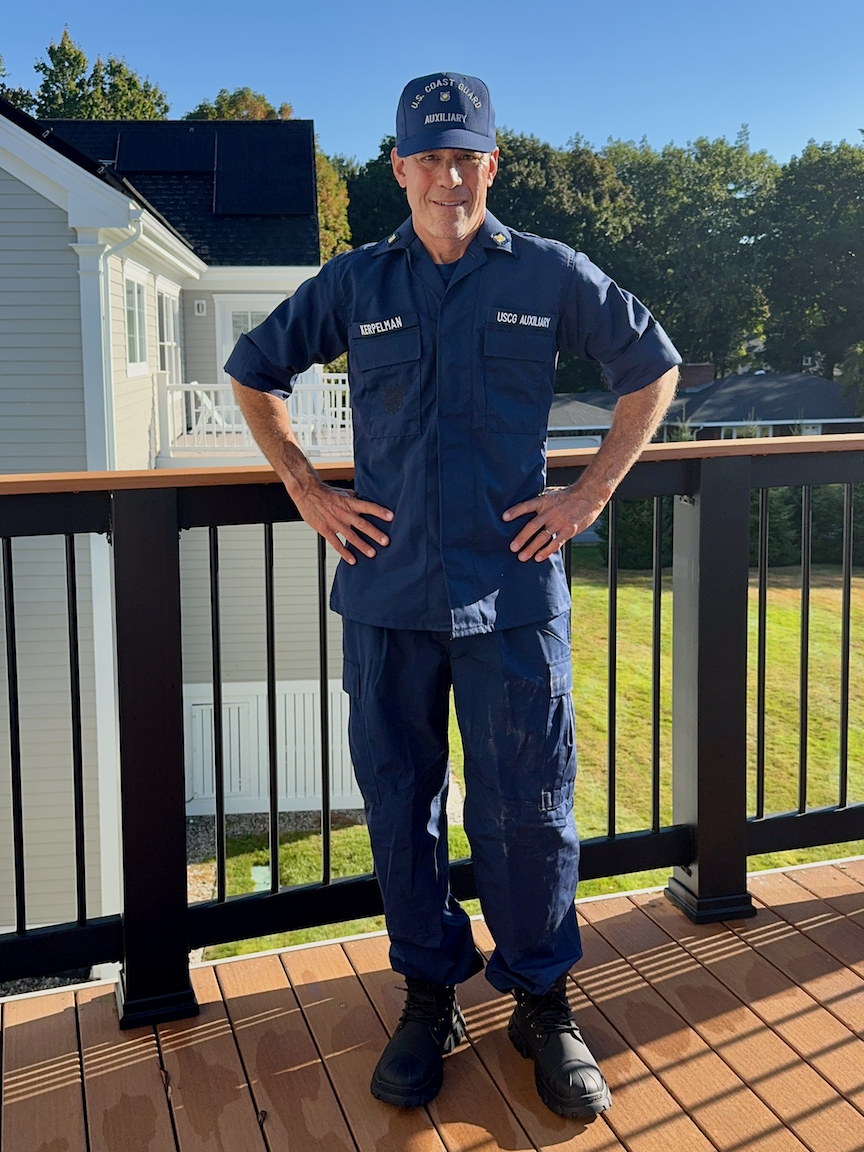
Becoming qualified required interviews by the fleet commander, a background security check, and passing no less than 10 exams on a wide variety of topics from emergency management to ethics. There were even tests on Auxiliary uniforms. Hard to believe, but there are no less than 100 pages of the Auxiliary manual describing the various aspects of uniforms, which are fundamentally identical to regular Coast Guard uniforms, with “Auxiliary” clearly identified and slightly different accessories.
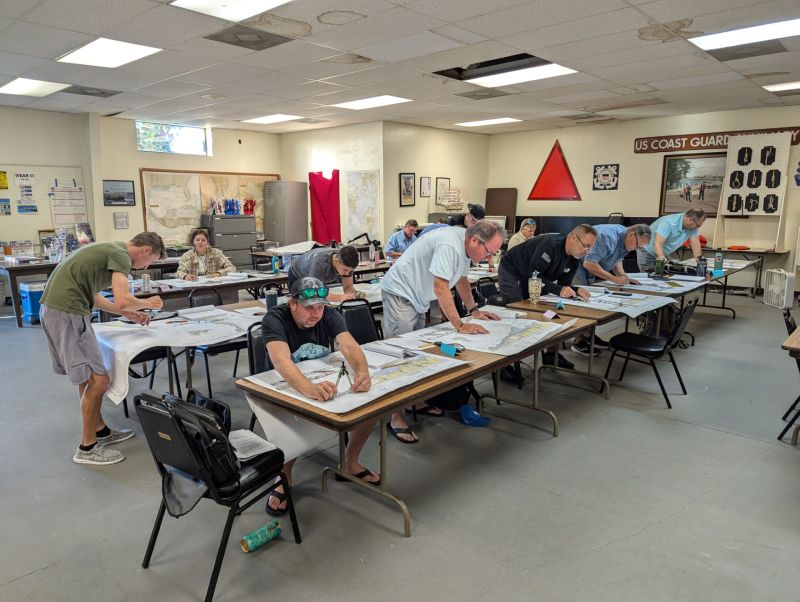
My particular focus initially is public education, vessel safety checks, and language interpretation. The Auxiliary offers a variety of training programs for both recreational and professional boaters and there are many around here! Maine maintains ~7,500 active lobstering licenses, handling nearly 3 million active traps. There are ~150,000 boats registered in total in the state. In a state with a population of 1.4 million, that ranks us as the state with the 4th most registered boats per capita, just behind Minnesota, Wisconsin and South Carolina. Needless to say, this gives rise to a lot of boaters with various levels of competency. Courses offered range from boating safety to seamanship to advanced navigation. I’ve begun training to teach a 10 week advanced navigation course and I’m developing a new course on using smartphones / tablets as navigation tools, and a webinar on safe boating around the hazards of the lobstering industry.
Vessel safety checks are inspections, at the request of boat owners, to make sure their vessel is safe and compliant with regulations. The Coast Guard periodically boards vessles on a random basis to do such checks. Boaters choosing an inspection provided by the Auxiliary can be waived of these disruptions.
There is an Auxiliary language intepreter corps that assists the Coast Guard with various duties, such as ensuring the health and safety of immigrants at sea, cooperating with foreign Coast Guards, or even diplomatic missions.
The “cool” stuff, such as participating in search and rescue missions aboard vessels or aircraft, mostly occurs during sailing season, so it’s probably not compatible with our other activities, but I do hope to get involved on a limited basis.
The Auxiliary provides ad hoc services, such as providing security at the base, or handling crowds for special events such as lighthouse open houses, or touring visiting coast guard vessels.
Here are some Auxiliary statistics:

Why is this post called a Tale of Two Coast Guards? Up until 2003, the Coast Guard was part of the Department of Transportation. It played a big role in responding to the 9/11 attacks, given the proximity of the attack sites to the water. It also played a big role in ensuring port security thereafter. Shortly after the Department of Homeland Security was formed, the Coast Guard was moved to that department. The purpose was to elevate its ability to contribute to security, and to be better funded in so doing. It previously had to compete with highway and airport renovation projects. As part of DHS, an organization whose vision is defensible, but whose ICE tactics are not only criminal, but have largely contributed to the degradation of civility and the rule-of-law, it was a little hard to join. In early 2025, Linda Fagan, the decorated national commodore of the Coast Guard was fired as one of the first acts of the new administration. Why? It’s a mystery, but we can’t escape the coincidence that she was the first female commodore, and the first commodore ever to be fired, while many other experienced, decorated military leaders were being fired, ostensibly because of their race or their gender (or facial hair, or testosterone level?). The Coast Guard was also victim to the blunt cancelation of all things related to diversity, equity, and inclusion. Granted, the country got carried away with being “woke”, and I agree it needed to be toned down. But it was done indiscriminately. When I was issued the Auxiliary manual, I was shocked to see how much of it was redacted wherever gender, diversity or inclusion were mentioned. At one point, the new administration relaxed rules about displaying hate symbols on US government property.
Despite these ideological differences, I was reassured. The Coast Guard walked a fine line between appeasing these new “rules”, while preserving its tradition of mutual respect, support and inclusion. For example, the Coast Guard acting commandant issued the following policy after the hate symbol rules were relaxed, stating, “The Coast Guard does not tolerate the display of divisive or hate symbols and flags, including those identified with oppression or hatred. These symbols reflect hateful and prohibited conduct that undermines unit cohesion. A symbol or flag is prohibited as a reflection of hate if its display adversely affects good order and discipline, unit cohesion, command climate, morale, or mission effectiveness.”
Among the qualification exams I mentioned was one on civil rights, and another on harassment prevention. Both of these courses were suspended at that time. They have since been revived.
So back to the “tale of two Coast Guards”, I am pleased to report that the organization continues to remain true to its values of honor, respect and devotion to duty, while craftfully appeasing the racist nonsense imposed on it from above.