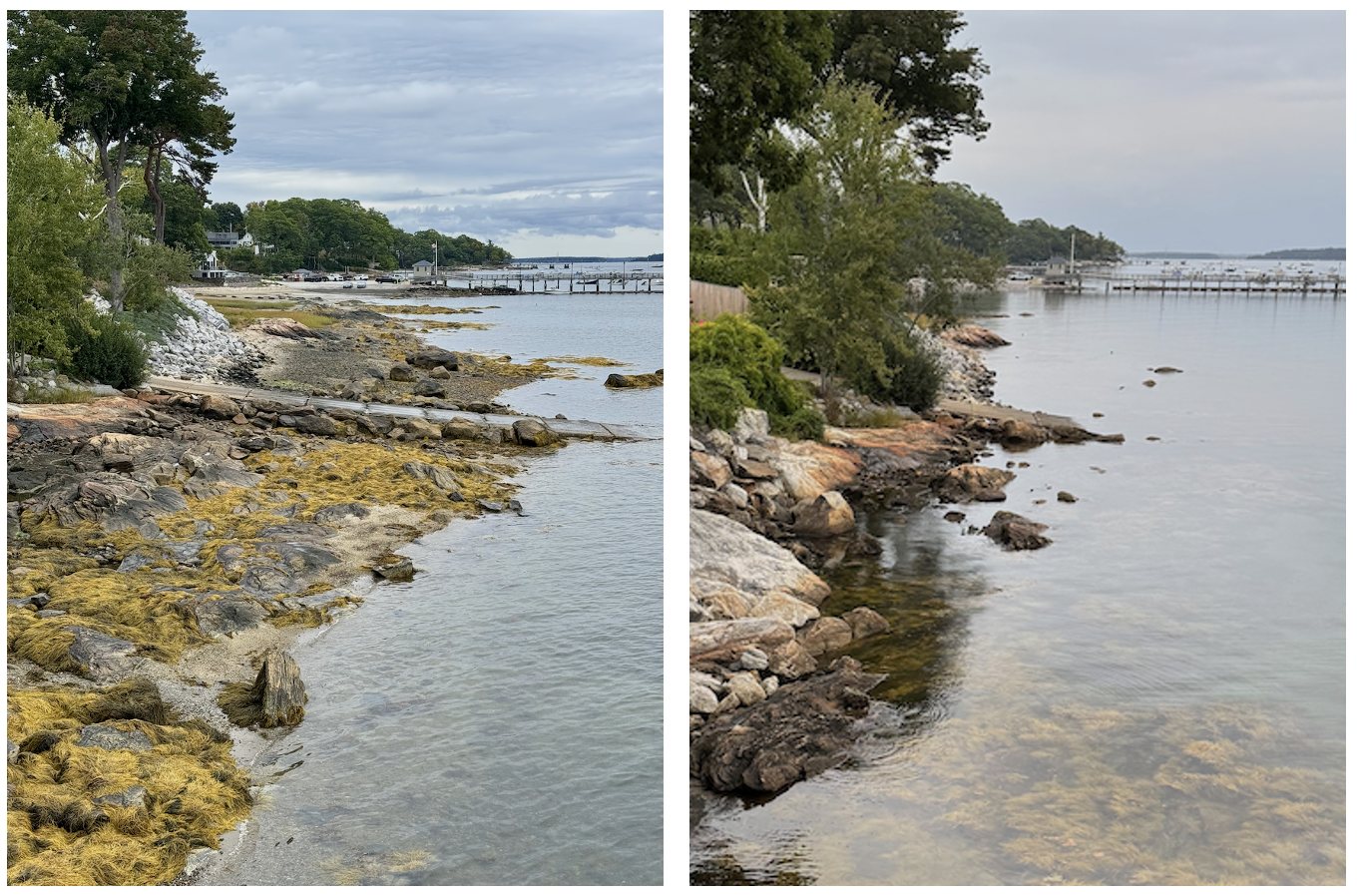
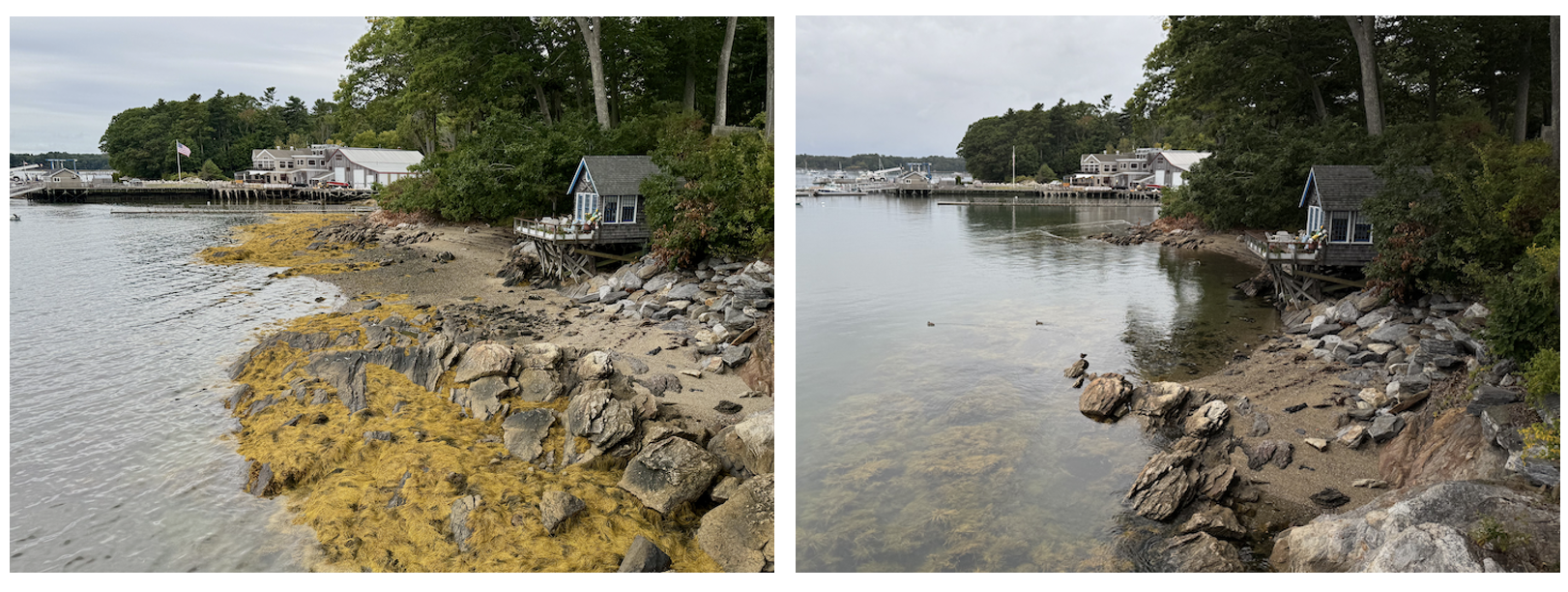
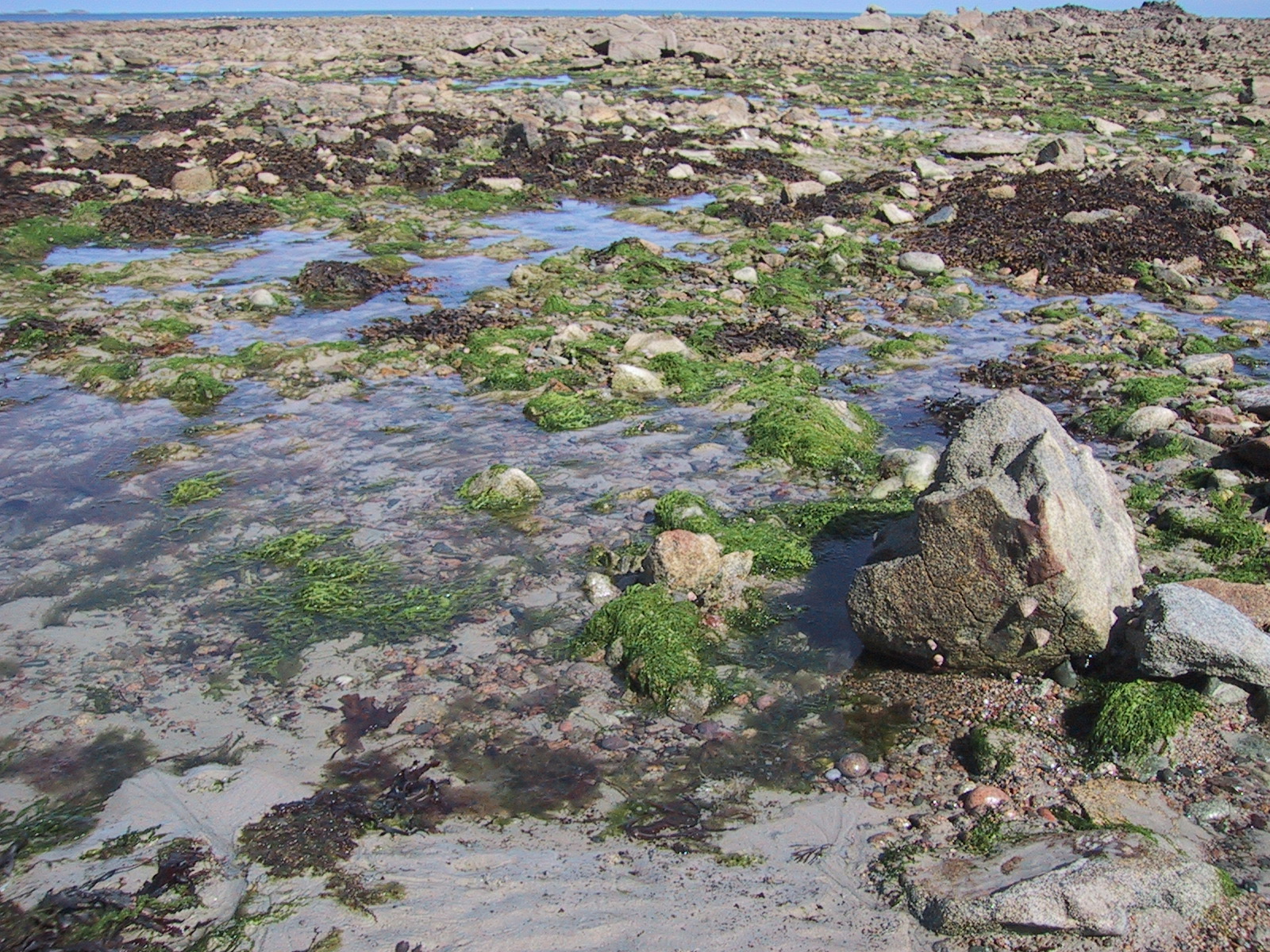
Otis Redding called it right in “Sittin’ on the Dock of the Bay”. I’ve always been fascinated by tides, starting as a small kid visiting Ogunquit, Maine. My sister and I spent hours each day exploring tidal pools. These are natural pools of water left behind at low tide, in which there was a variety of sealife ranging from starfish, to sea snails, to hermit crabs. Our parents reluctantly let us fill our hotel bathtub with seawater so that we could bring animals home in a bucket and create our own tidal pool in the room. Be assured, we returned them to the sea before pulling the drain plug at the end of our stay.
This fascination was furthered when we spent time on the Cape Cod Bay. At low tide, a number of sandbars are exposed, enabling walking a mile out into the bay on these sandy islands. Wildlife was abundant, and we would rake clams to steam, while observing fish, hermit crabs and horseshoe crabs.
Along the coast of Maine, the sea level fluctuates between 10 and 15 feet with two high tides and two low tides each day.
Tides are caused by various factors. There is the varying gravitational pull of the moon and the sun as the earth turns and makes its annual journey around the sun. Other factors include depth, underwater terrain (bathymetry), and weather. The level of tidal change varies based on the juxtaposition of these factors, but does so in a predictable way, and tide forecasts typically project a year at a time.
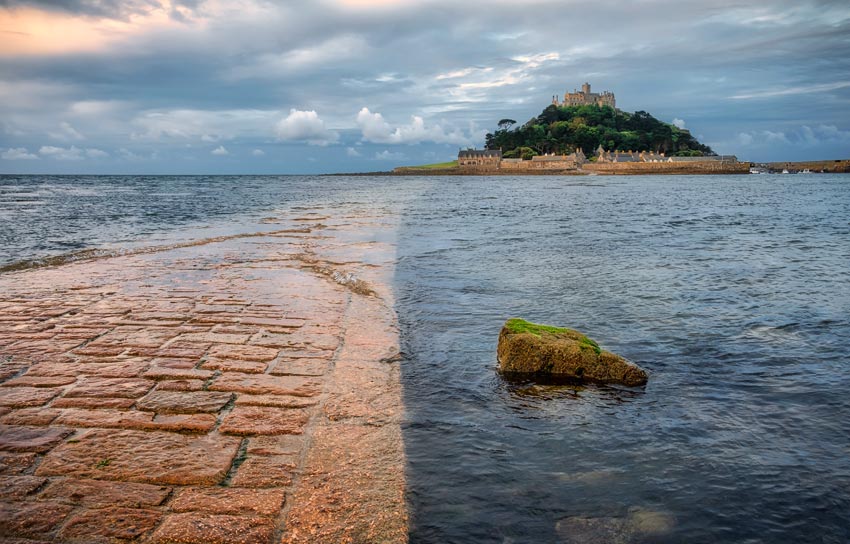
What makes them so interesting? There are many reasons. They completely change the visual characteristics of the coast. As the tide ebbs and flows, it can create strong currents which, if used to one’s advantage, can add to boat speed. Tides are also nature’s artists, creating beautiful etchings on sandy beaches.
Tides can also provide challenges. Opposing tidal currents can slow boats down. I remember visiting the Morbihan Bay in Brittany, France, where sailboats, although progressing quickly against the water’s surface, were actually moving backwards relative to land as they opposed the tidal current. Also, docking and anchoring are particularly challenging in tidal areas. Floating docks that rise and fall with the water level, simplify docking. But where there are fixed-height docks, lines need to be constantly adjusted to avoid “hanging” the boat from the dock, or having two much slack, allowing the boat to drift away from the dock. In shallow areas, docks need to be located far offshore to ensure enough water depth at low tide. This requires constructing long bridges connecting the dock to the land.
Anchoring is another challenge. First, when you choose a spot to anchor at high tide, you need to subtract the tidal range to make sure you’re not going to run aground when the tide goes out. Similarly, if you choose a spot at low tide, you need to add to the amount of chain let out to make sure you it’s long enough (has enough scope) when the tide comes in. Finally, because boats swing at anchor, and can swing a full 180º as the tidal currents reverse direction, the swing radius increases as the tide ebbs. This needs to be taken into account to avoid swinging into rocks, shallow water, or other vessels.
Normally, all boats swing more or less in unison, but at slack tide (short periods near peak high or low tide when there’s no current), their anchor chains “relax” and they can bump into each other. Also, anchored boats react differently to wind and current so that also creates collision risk if one boat swings one way with the wind, while another swings the opposite way with the current.
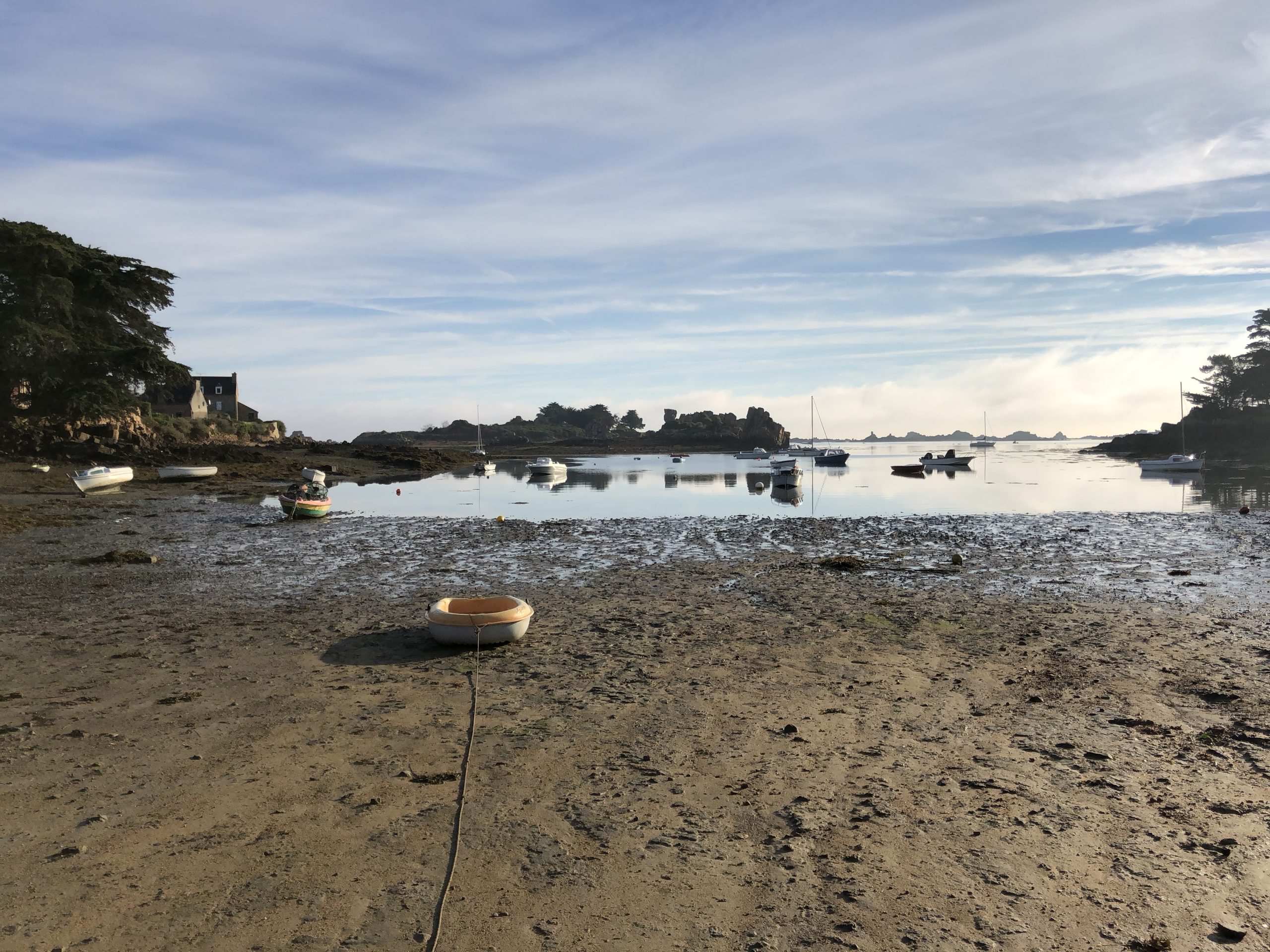
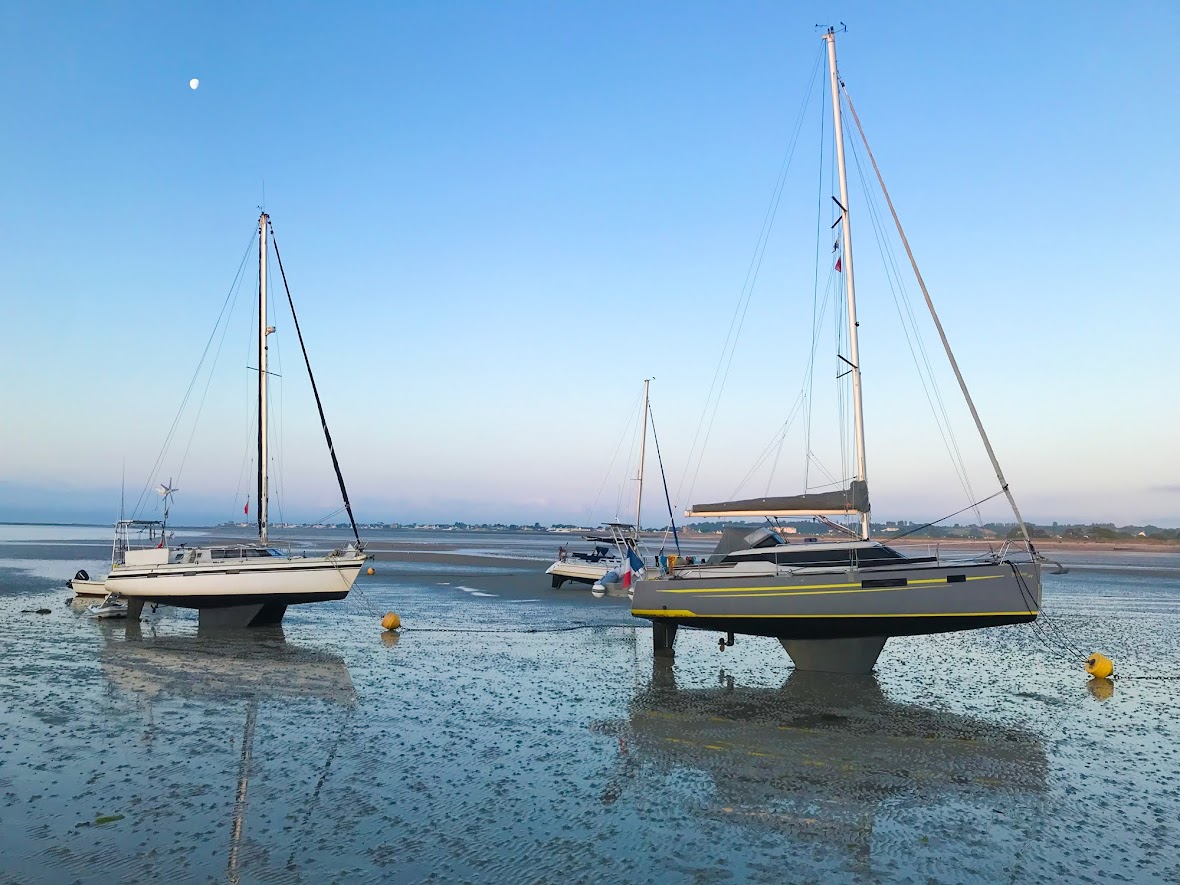
Again, in Brittany and Normandy, France, which are also extreme tidal regions, many boats are just left to sit on the mud at low tide. There’s even a French sailboat design, called the Biloup, that has two keels to create a tripod along with the rudder to keep it upright when bottomed out. The advantage of intentional grounding at low tide is that it enables maintenance of the hull, without hauling the boat out or diving underwater.
There are marinas that can only be accessed at high tide. A few years ago, we visited Québec City. It’s on the Saint Lawrence River but close enough to the Atlantic to have significant tidal variation. The main marina is kept at constant depth, and there’s a dedicated lock to raise and lower boats as they enter and exit. At high tide, the marina level matches the river level, so the lock gates briefly are left open for free passage.
Some regions have one tide cycle per day, called diurnal tides. Others have two cycles per day, called semi-diurnal. This depends the region’s location on earth.
Tides are like sine waves in that the rise (flow) and fall (ebb) start slowly, accelerate midway, and slow toward the next slack tide. A trick to estimating the amount of tide at a given moment is the rule of 12. The time between slack tides is divided by 12. For a semi-diurnal tide, 1/12 of the tide range occurs during the 1st hour, 2/12 during the 2nd hour, 3/12 during the 3rd and 4th hours, 2/12 during the 5th hour, and 1/12 during the 6th and final hour.